A roof leak usually shows up far from where water actually enters. Water travels down the underside of the roof deck and rafters before it drips through a ceiling, so a stain over a Tennyson Heights bedroom can trace…
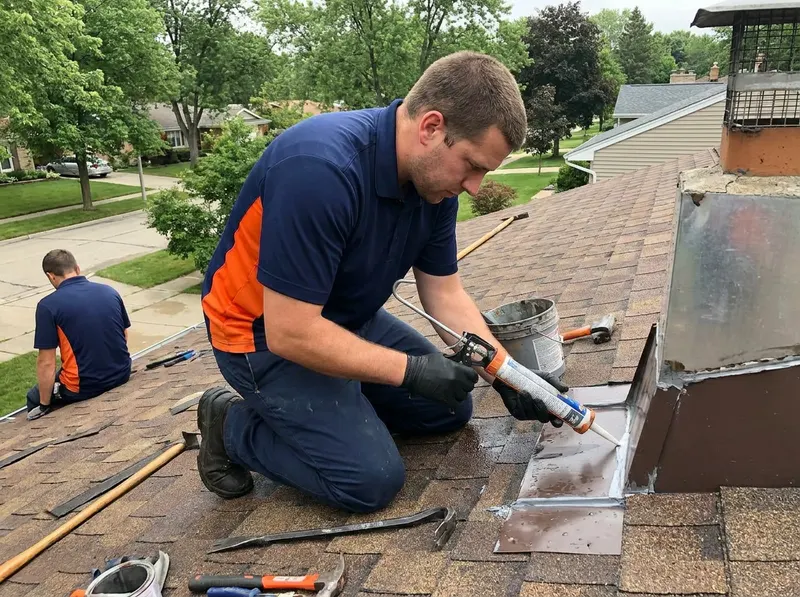
A roof leak usually shows up far from where water actually enters. Water travels down the underside of the roof deck and rafters before it drips through a ceiling, so a stain over a Tennyson Heights bedroom can trace back to a flashing gap 6 to 10 feet up-slope. Leak repair starts by finding the true entry point, not just patching the wet spot below it. Common sources on North Shore homes are step flashing along chimneys and dormers, rubber pipe boots that crack after 8-12 years of sun, valley metal, and shingles lifted by the winds coming off the Lake Michigan bluffs.
A repair fits when the roof is otherwise sound and the leak comes from one or two identifiable details. If a Ravine Woods or Fairy Chasm home has a 12-year-old roof with a single failed boot, sealing that boot is the correct fix and costs a fraction of replacement. Replacement enters the conversation when a roof is near the end of its service life, when multiple slopes leak at once, or when decking under the shingles is soft from long-term saturation. The trade-off is straightforward: a repair buys targeted years for a low cost; a replacement resets the whole roof at a much higher one. Findings are photographed so the homeowner sees the actual condition and decides, rather than being pushed toward the larger job.
Bayside's tree-heavy lots in Ellsworth Park and Ravine Woods add a specific problem: leaf and needle debris packs into valleys and gutters, backs water up under the shingle course, and forces it past the flashing. Homes along the Brown Deer Road corridor and in Indian Creek with low-slope porch or garage roofs are also prone to seam and membrane leaks that a steep-slope shingle fix will not solve. A leak repair on those sections targets the seam or transition rather than the field of the roof.
How a repair runs: 1) trace the water path in the attic or ceiling cavity to find the up-slope source; 2) inspect the suspected detail on the roof and photograph it; 3) seal or replace the failed flashing, boot, or shingles; 4) note any adjacent wear and share the photos so the homeowner knows what is holding and what is aging. The recommendation is repair-first: if a targeted fix will hold, that is what gets quoted, in contrast to the replace-everything pitch common from storm-chasers after Wisconsin hail season.
Every job gets a firm, written price after a free on-site visit.
Tell us about your roof leak repair job in Bayside and we'll send a clear, written quote, usually the same day.
 North Shore Roofers