Flashing failure is the most common leak source on the older brick-and-cedar homes along the Brown Deer Road corridor and in Ravine Woods, where chimneys are large and the roof planes are steep. Step flashing, the…
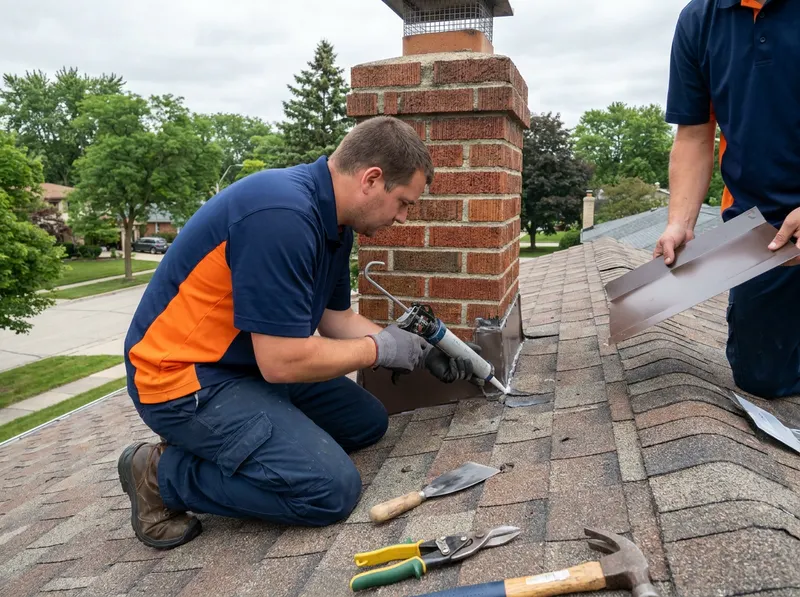
Flashing failure is the most common leak source on the older brick-and-cedar homes along the Brown Deer Road corridor and in Ravine Woods, where chimneys are large and the roof planes are steep. Step flashing, the small L-shaped pieces layered between shingles where a roof meets a chimney or wall, corrodes, lifts, or was sometimes sealed with caulk instead of proper metal by a prior contractor. Caulk lasts a few years; correctly woven step flashing lasts as long as the shingles. A stain on a Tennyson Heights ceiling directly below a chimney almost always traces to failed counter-flashing or a cracked chimney crown, not the shingle field itself.
The repair-first approach matters here. On homes near Fairy Chasm and Ellsworth Park, a chimney leak often needs only new counter-flashing cut into the mortar joint and a resealed crown, a $400 to $900 fix, not a full roof replacement a storm-chaser might push. Decision-fit is straightforward: if the shingles around the leak are sound and under 15 years old, targeted flashing repair is the right call; if the surrounding field is brittle, curling, or the flashing failure spans multiple penetrations, replacing the affected roof section makes more sense than patching it twice. The trade-off is short-term cost versus repeat visits, a single reflash costs less today, while a section replacement solves an aging, multi-point problem at once.
Chimney work in Bayside carries a masonry wrinkle. Many Indian Creek and Bayside Terrace homes have brick chimneys where the mortar joints have opened; counter-flashing must be re-cut and re-set into a sound joint, so a crumbling crown or spalling brick is documented and flagged before flashing is installed. Copper flashing is common on Blackhawk-area homes with slate or high-end architectural roofs; copper is repaired or matched rather than swapped for cheaper aluminum, which would corrode against the existing metal. Lake Michigan bluff exposure near the Schlitz Audubon Nature Center drives faster metal wear from wind-driven moisture, so coastal-facing flashing is inspected more closely.
How the visit works, in order: 1) the leak point is traced from the interior stain back to the roof penetration; 2) every chimney, valley, and boot is photographed and shown to the homeowner; 3) a written scope separates true flashing repair from any needed masonry or shingle work; 4) the repair is completed and the sealed joints are re-photographed. Findings are shown as photos, not described from the ground.
Every job gets a firm, written price after a free on-site visit.
Tell us about your flashing & chimney repair job in Bayside and we'll send a clear, written quote, usually the same day.
 North Shore Roofers